What Batch Polymer Prep Systems Are Better Than Continuous Systems
Why controlled batch preparation outperforms continuous systems, based on established polymer activation and molecule-extension principles.
What polymer actually does, why proper preparation matters, and how to reach the lowest total operating cost, not just the lowest pump setting.
Polymer is one of the largest recurring operating costs at many dewatering and thickening facilities, reaching 30 to 50% of sludge processing cost by some estimates. When dewatering results slip, the instinct is often to turn up the polymer pump, but the real issue frequently starts upstream, in how the polymer is diluted, activated, and conditioned. This guide walks through what polymer actually does and how facilities can reach the lowest total operating cost, not just the lowest pump setting
If a share of your polymer is never fully activated, you are paying for chemistry that never does its job.

Definition
Polymer is a long-chain, water-soluble molecule used to improve the separation of solids from water. Wastewater sludge contains very small particles that stay suspended because of their surface charge and small particle size. Polymeric flocculants help these particles combine into larger flocs through charge interactions and polymer bridging.
For a non-chemist, think of polymer as a very long molecular chain that connects small sludge particles and forms larger, stronger flocs. Those flocs can then be separated far more effectively in centrifuges, belt presses, screw presses, and sludge thickeners.
How Polymer Activates: The Chain-Opening Process
A dry or emulsion polymer starts as a tightly coiled molecule. It only works once it has “opened up.” Activation happens in stages:
Dry / coiled polymer: the chain is folded and inactive.
Charge development and full chain extension must occur before the polymer reaches the sludge. A partially opened chain delivers weaker flocs and higher polymer demand.
.svg)
A dedicated polymer preparation system is required when the polymer product must be diluted, activated, and conditioned before it can perform effectively in the sludge process. Simply pumping concentrated polymer into sludge is generally not sufficient.
The polymer must contact water under controlled conditions. Its charge must develop and its molecular chains must sufficiently extend before effective floc formation can occur. Inadequate preparation shows up as real operating pain:
If any of these sound familiar, the preparation step, not the dose, is often the place to start.
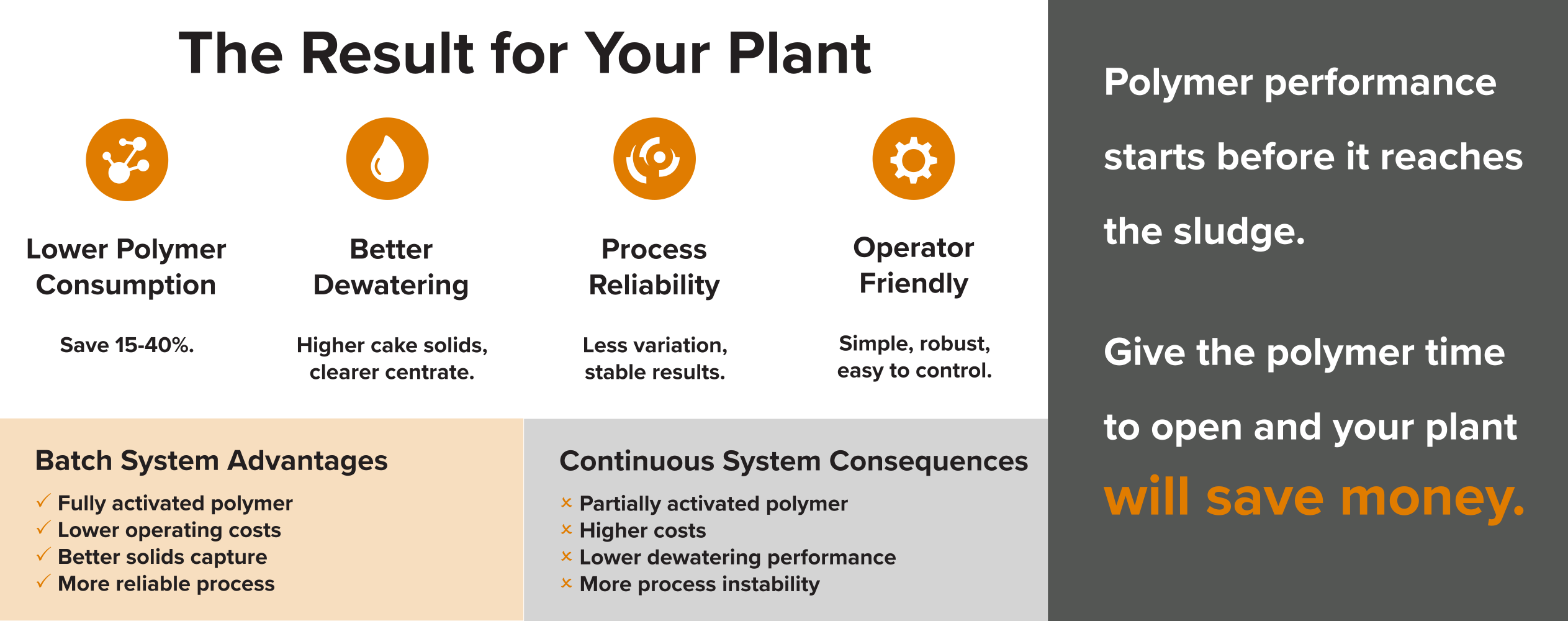
One of the most consequential design choices is whether polymer is prepared in a controlled batch process with a defined maturation (retention) time, or in a continuous inline process with very short retention.
The difference comes down to whether the polymer has enough time and the right mixing conditions to fully activate. A controlled batch process with high-energy initial dispersion followed by low-shear maturation gives the polymer chains time to develop charge and extend. A continuous system with an inline mixing unit and very short retention time can leave the polymer only partially activated, used too early, before the chain has fully opened.
Why controlled batch preparation outperforms continuous systems, based on established polymer activation and molecule-extension principles.
| Factor | Controlled Batch Preparation | Continuous / Short-Retention | ||||
|---|---|---|---|---|---|---|
| Retention time | Defined, ensures full activation | Very short, polymer used too early | ||||
| Charge development & extension | Sufficient time for both | Often incomplete | ||||
| Polymer Utilization | Complete, lower consumption | Partial, higher polymer demand | ||||
| Working Solution Consistency | Consistent, batch to batch | Variable | ||||
| Sensitivity to Water / Line Pressure | Controlled metering, no add-on booster pumps | May require booster pumps (added equipment) | ||||
| Result | Higher cake solids, clearer centrate | Lower dewatering performance |
| Retention time | Defined, ensures full activation |
| Charge development & extension | Sufficient time for both |
| Polymer Utilization | Complete, lower consumption |
| Working Solution Consistency | Consistent, batch to batch |
| Sensitivity to Water / Line Pressure | Controlled metering, no add-on booster pumps |
| Result | Higher cake solids, clearer centrate |
| Retention time | Very short, polymer used too early |
| Charge development & extension | Often incomplete |
| Polymer Utilization | Partial, higher polymer demand |
| Working Solution Consistency | Variable |
| Sensitivity to Water / Line Pressure | May require booster pumps (added equipment) |
| Result | Lower dewatering performance |
| Retention time | |
| Charge development & extension | |
| Polymer Utilization | |
| Working Solution Consistency | |
| Sensitivity to Water / Line Pressure | |
| Result |
| Retention time | |
| Charge development & extension | |
| Polymer Utilization | |
| Working Solution Consistency | |
| Sensitivity to Water / Line Pressure | |
| Result |
| Retention time | |
| Charge development & extension | |
| Polymer Utilization | |
| Working Solution Consistency | |
| Sensitivity to Water / Line Pressure | |
| Result |
| Retention time | |
| Charge development & extension | |
| Polymer Utilization | |
| Working Solution Consistency | |
| Sensitivity to Water / Line Pressure | |
| Result |
| Retention time | Defined, ensures full activation |
| Charge development & extension | Sufficient time for both |
| Polymer Utilization | Complete, lower consumption |
| Working Solution Consistency | Consistent, batch to batch |
| Sensitivity to Water / Line Pressure | Controlled metering, no add-on booster pumps |
| Result | Higher cake solids, clearer centrate |
| Retention time | Very short, polymer used too early |
| Charge development & extension | Often incomplete |
| Polymer Utilization | Partial, higher polymer demand |
| Working Solution Consistency | Variable |
| Sensitivity to Water / Line Pressure | May require booster pumps (added equipment) |
| Result | Lower dewatering performance |
| Retention time | |
| Charge development & extension | |
| Polymer Utilization | |
| Working Solution Consistency | |
| Sensitivity to Water / Line Pressure | |
| Result |
| Retention time | |
| Charge development & extension | |
| Polymer Utilization | |
| Working Solution Consistency | |
| Sensitivity to Water / Line Pressure | |
| Result |
| Retention time | |
| Charge development & extension | |
| Polymer Utilization | |
| Working Solution Consistency | |
| Sensitivity to Water / Line Pressure | |
| Result |
| Retention time | |
| Charge development & extension | |
| Polymer Utilization | |
| Working Solution Consistency | |
| Sensitivity to Water / Line Pressure | |
| Result |
The takeaway is not that one tank is bigger than another. It is that polymer performance depends on giving the molecule the conditions and time to open up.
Maturation (aging) time depends on the polymer type: dry (powder) polymers generally need about an hour, emulsion polymers need roughly 10 minutes, and true liquid (solution) polymers may only need an inline static mixer. Because those windows differ so widely, a defined retention step is what ensures each polymer reaches full activation before it meets the sludge.
The reference points behind that, drawn from major manufacturers’ preparation guidance:
The practical point for facility teams: a system that provides a controlled, defined maturation window accommodates all three, while an inline-only, short-retention approach quietly assumes the polymer is the one type that needs the least time.
A prepared working solution is a perishable product, and knowing its shelf life prevents a hidden source of poor dewatering. As a general guide from manufacturer literature, a dilute powder solution around 1 g/L may hold for roughly 24–48 hours, while a more concentrated 5 g/L solution can remain usable for several days; dilute emulsion solutions are typically shorter-lived (on the order of hours). Hard water can roughly halve those windows. Cationic solutions are the least stable and are best prepared fresh, at a mildly acidic pH, and used the same day. The operational implication: prepare solution close to when it will be used, size batches to actual demand, and avoid holding diluted polymer far longer than its usable life.
| Name | Dry polymer | Liquid polymer | ||||
|---|---|---|---|---|---|---|
| Typical form | Powder, granules, or beads | Emulsion or dispersion | ||||
| Active content | High | Lower (requires inversion) | ||||
| Preparation Need | Dry feeding, dust management, careful wetting to prevent agglomeration | Controlled inversion and dilution; accurate metering; effective initial mixing | ||||
| Handling | More operator attention at feed | Easier to pump and automate |
| Typical form | Powder, granules, or beads |
| Active content | High |
| Preparation Need | Dry feeding, dust management, careful wetting to prevent agglomeration |
| Handling | More operator attention at feed |
| Typical form | Emulsion or dispersion |
| Active content | Lower (requires inversion) |
| Preparation Need | Controlled inversion and dilution; accurate metering; effective initial mixing |
| Handling | Easier to pump and automate |
| Typical form | |
| Active content | |
| Preparation Need | |
| Handling |
| Typical form | |
| Active content | |
| Preparation Need | |
| Handling |
| Typical form | |
| Active content | |
| Preparation Need | |
| Handling |
| Typical form | |
| Active content | |
| Preparation Need | |
| Handling |
| Typical form | Powder, granules, or beads |
| Active content | High |
| Preparation Need | Dry feeding, dust management, careful wetting to prevent agglomeration |
| Handling | More operator attention at feed |
| Typical form | Emulsion or dispersion |
| Active content | Lower (requires inversion) |
| Preparation Need | Controlled inversion and dilution; accurate metering; effective initial mixing |
| Handling | Easier to pump and automate |
| Typical form | |
| Active content | |
| Preparation Need | |
| Handling |
| Typical form | |
| Active content | |
| Preparation Need | |
| Handling |
| Typical form | |
| Active content | |
| Preparation Need | |
| Handling |
| Typical form | |
| Active content | |
| Preparation Need | |
| Handling |
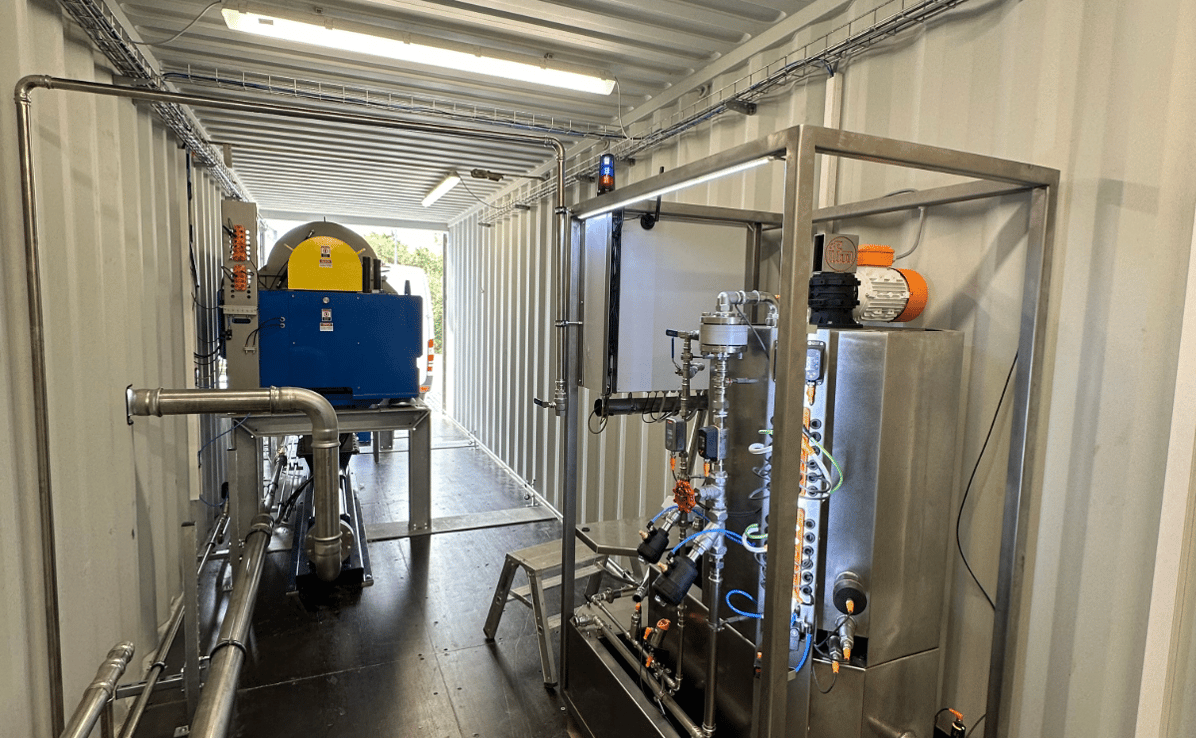
The best choice depends on consumption, available space, operator resources, storage, and process requirements. The PPS Polymer Prep System is designed primarily for liquid emulsion and dispersion polymers.
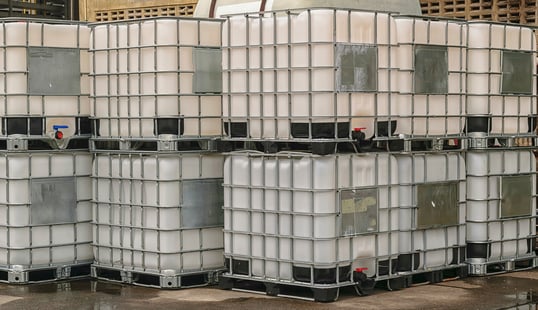
Emulsion polymers are often described as “easy to pump,” and they are, but they are not a simple liquid. An emulsion is a suspension of polymer microbeads in oil, and it needs the right handling to reach the process in good condition. A few practical points that facilities dealing with emulsion polymer should keep in mind:
Store it protected and temperature-stable. Keep drums and totes indoors at a steady, moderate temperature. Freezing, repeated warm/cold cycling, and water contamination are common causes of lumps, skins, and gels that later foul metering pumps.
Homogenize before use if it has been stored a while. Emulsions can separate over months, with an oil layer forming on top. Product held longer than about a month should be re-mixed before it is drawn into the preparation system.
Match the pump to the fluid. Progressive-cavity and peristaltic pumps handle emulsion polymer gently; high-shear pump types can begin activating or degrading the polymer before it ever reaches the mix water.
Clean spills dry first. Spilled polymer becomes extremely slippery once it contacts water, so wipe or absorb spills before rinsing. Never mix anionic and cationic products in the same lines or tanks, because they react and precipitate.
None of this replaces the polymer supplier's handling and safety documentation, but it explains why a controlled preparation step, proper metering, and gentle pumping protect the investment you have already made in the polymer itself.

Proper activation means three things have happened together:
The polymer has been uniformly dispersed in water.
Its ionic charge has developed.
The long polymer molecules have sufficiently extended.
There are two failure modes on opposite ends. If the polymer is under-mixed or poorly prepared, activation is incomplete and efficiency drops. If the polymer is subjected to excessive mechanical shear, once the chains and flocs have developed, that shear damages them.
The process objective is therefore controlled high-energy dispersion at the initial contact point, followed by effective but low-shear mixing. This balance is the central design principle behind the PPS Polymer Prep System.
Here is the key insight facilities sometimes miss: the lowest polymer dose is not automatically the lowest operating cost.
The real objective is the lowest total operating cost at stable separation performance, not simply the lowest polymer pump setting. Proper preparation is what makes that possible, because it ensures every gallon of polymer is fully working before it reaches the sludge.
It is worth noting where the incentives sit. Because polymer is a recurring purchase, an approach that leaves activation to chance can quietly shift cost onto the chemical line, month after month, rather than into the preparation step. Investing in full activation moves that money once, into a measurable process improvement, instead of paying for it repeatedly in higher dose.
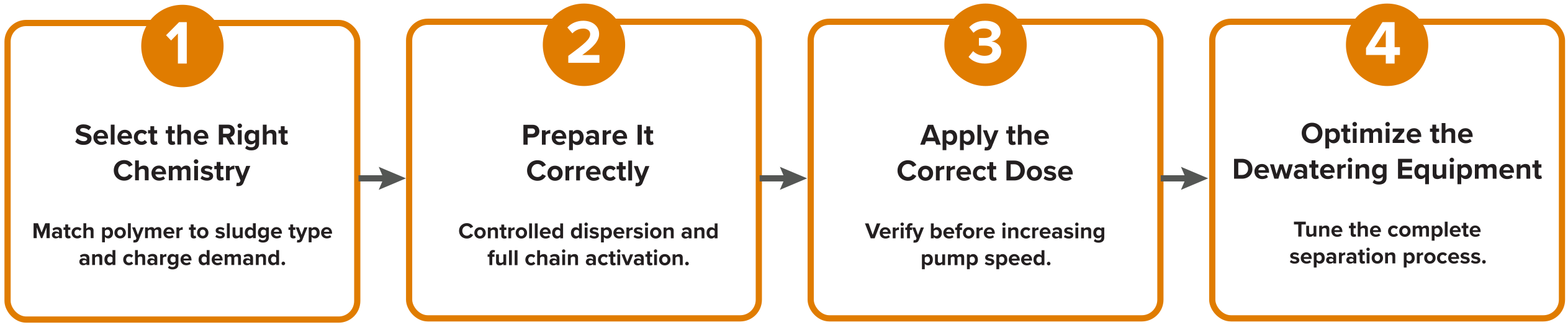
Polymer optimization cannot be reduced to “turn the pump up or down.” The complete conditioning and separation process has to be considered. Key variables include:
Most polymer problems trace back to a handful of recurring issues:
The most common mistake is responding to poor dewatering by simply increasing the polymer dose. Before changing the dose, work through the process in order:
Verify dilution water flow
Verify polymer flow
Confirm prepared solution concentration
Check preparation quality (dispersion and maturation)
Confirm sludge solids loading
Confirm downstream equipment operation
Change only one variable at a time, and give the system time to stabilize before evaluating results.
Operators can learn a great deal from simple, disciplined observation. Common evaluations include:
Jar tests and application-specific bench tests support polymer selection and dose optimization. Field observations should always be interpreted in the context of the complete process, not a single measurement in isolation.
| Polymeric flocculant | A long-chain, water-soluble molecule that helps small suspended particles combine into larger flocs. |
| Activation | The process of dispersing, charging, and extending polymer molecules so they can bridge particles. |
| Charge development | Formation of ionic charge along the polymer chain after contact with water. |
| Chain extension | Unfolding and stretching of the coiled polymer molecule so it can bridge particles. |
| Maturation (aging) | The controlled retention period during which chains fully hydrate and extend. |
| Initial dispersion | The high-energy first-contact mixing that wets and distributes polymer uniformly (~3–5 kW/m³). |
| Shear | Mechanical force during mixing; too little limits dispersion, too much damages developed chains and flocs. |
| Working solution concentration | The diluted polymer concentration used in the process, typically ~0.1–0.5%. |
|
Conductivity monitoring |
Using conductivity as an indicator that a batch has reached its target readiness. |
|
Solids capture |
The percentage of feed solids retained in the cake rather than lost to the centrate/filtrate. |
|
Cake solids |
The dry-solids content of the dewatered product; higher cake solids means less water to haul. |
|
Centrate / filtrate |
The liquid stream separated from the solids by the dewatering equipment. |