
Removal | Dewatering | Cleaning | Treatment
Decanter Centrifuges for Site Remediation & Environmental Cleanup
Every remediation project brings different materials, operating conditions and timelines.
Centrisys/CNP decanter centrifuges provide continuous solid-liquid separation to help environmental contractors, municipalities, industrial facilities and engineering firms reduce waste volume, recover water and keep demanding cleanup projects moving.
From contaminated soil and lagoon sludge to tank cleanouts and landfill leachate, our centrifuges are engineered for reliable performance under changing feed conditions. Flexible rental options are also available for temporary, emergency and long-term projects.

Table of Contents

- Trusted by Environmental & Remediation Contractors
- Solve the Dewatering Challenges That Drive Remediation Costs
- Decanter Centrifuge Applications for Site Remediation
- Why Use a Decanter Centrifuge for Site Remediation?
- Centrifuge Technology Built to Adapt to Changing Material Conditions
- A Centrifuge Configuration Built Around Your Remediation Project
- Rent or Purchase? Match the Equipment to Your Remediation Project
- Why Choose Centrisys/CNP?
- FAQs
- Request More Info
Centrisys/CNP works with leading environmental service providers, waste management companies and remediation contractors to support demanding cleanup and dewatering projects.
Our site remediation customers include:
Solve the Dewatering Challenges That Drive Remediation Costs
Removing contaminants is only part of the challenge. Once sludge, slurry or sediment is generated, how efficiently you separate solids from liquids can have a significant impact on transportation, disposal, water management and project timelines.
Centrisys/CNP decanter centrifuges provide continuous mechanical dewatering to help address some of the most common challenges encountered in the field:
- Reduce Hauling and Disposal Costs: Remove excess water before transportation to reduce the volume and weight of material requiring off-site disposal.
- Keep Up With Changing Feed Conditions: Process materials with fluctuating solids concentrations and characteristics while maintaining reliable separation performance.
- Keep Projects Moving: Continuous processing helps reduce the delays associated with passive settling, drying and batch dewatering methods.
- Maximize Limited Jobsite Space: Achieve high-capacity mechanical separation within a compact footprint when space for ponds, drying beds or other dewatering methods is limited.
- Recover Water for Reuse or Treatment: Separate suspended solids to recover liquid for reuse, additional treatment or appropriate discharge based on project requirements.
Contaminated Soil & Media Removal
Dewater slurry generated during soil washing and contaminated-media processing to reduce disposal volume, improve solids handling and recover process water.
-
Common applications include:
-
Brownfield redevelopment
-
Industrial site cleanup
-
Manufactured gas plant (MGP) sites
-
Petroleum-contaminated soils
-
Mining remediation
-
Soil washing operations
Tank Cleaning & Industrial Sludge Removal
Process high-solids sludge generated during tank and vessel cleanouts to reduce disposal volume, improve material handling and help equipment return to service sooner.
Common applications include:
- Storage tanks
- Digesters
- Clarifiers
- Process vessels
- Equalization tanks
- Industrial sludge cleanouts
Landfill Dewatering & Leachate Treatment
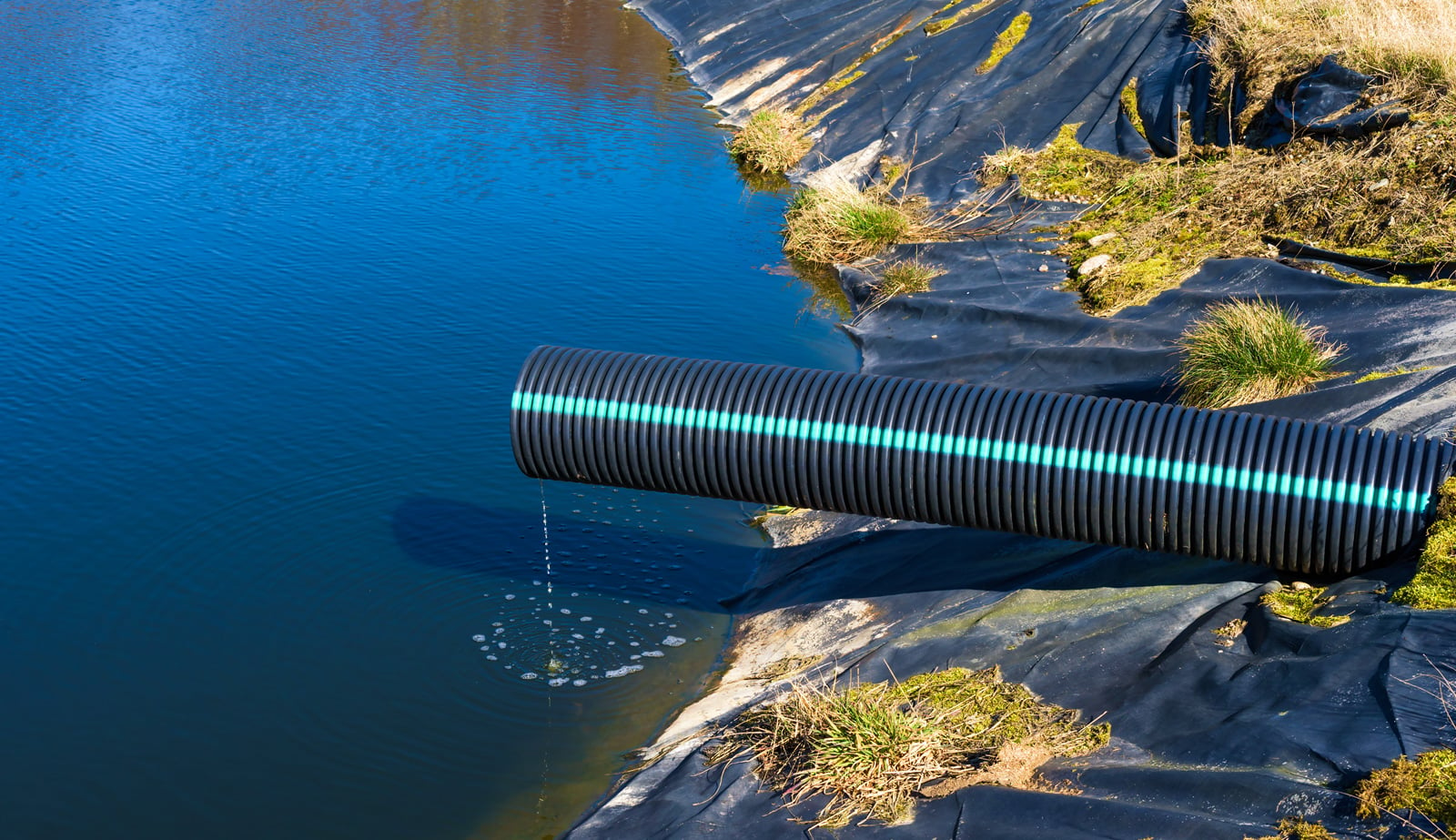
Separate suspended solids from landfill leachate and sludge to reduce disposal volume and solids loading on downstream treatment processes.
Common applications include:
- Landfill leachate treatment
- Landfill sludge dewatering
- Industrial wastewater treatment
- Sludge processing
- Environmental cleanup operations
Why Use a Decanter Centrifuge for Site Remediation?
Gravity settling, drying beds, geotextile tubes and other dewatering methods can be effective for certain projects, but they may require significant space, longer processing times or greater dependence on weather and material conditions. A decanter centrifuge provides continuous mechanical separation, giving remediation teams greater control over the dewatering process.
Site Remediation Comparisons
| Project Consideration | Decanter Centrifuge | Traditional/Passive Methods | ||||
|---|---|---|---|---|---|---|
| Processing | Continuous | Often batch or passive | ||||
| Footprint | Compact | May require substantial space | ||||
| Weather Dependency | Minimal | Drying may depend on weather | ||||
| Changing Feed Conditions | Operating parameters can be adjusted | Performance may vary | ||||
| Operator Involvement | Automated operation | May require more manual handling | ||||
| Processing Time | Continuous throughput | Settling or drying may extend timelines | ||||
| Waste Volume | Removes water before haul | Material may retain more moisture |
For remediation projects where schedule, footprint, disposal volume and operating consistency matter, mechanical dewatering can provide an efficient alternative to passive separation methods.
Centrifuge Technology Built to Adapt to Changing Material Conditions
Feed conditions can change throughout a remediation project. Solids concentrations, material characteristics and loading conditions may fluctuate from one stage of a cleanup to the next, making precise centrifuge control important for maintaining consistent separation performance.
Centrisys decanter centrifuges feature the Viscotherm ROTODIFF® hydraulic back drive, which automatically adjusts differential speed as material characteristics and loading conditions change.
The ROTODIFF delivers high torque across operating speeds, helping maintain stable centrifuge performance while reducing the need for manual adjustments. Its hydraulic design also supports efficient operation while eliminating the traditional gearbox as a wear component.
For remediation teams managing variable materials and demanding operating conditions, that additional level of control can help maintain consistent processing throughout the project.
A Centrifuge Configuration Built Around Your Remediation Project
No two site remediation projects have exactly the same feed material or operating requirements. Selecting the right centrifuge requires more than choosing a machine based on capacity alone. Centrisys/CNP works with your team to evaluate the application and recommend equipment based on the conditions that can directly affect separation performance.
Our application engineers can evaluate:
- Feed material and solids characteristics
- Solids concentration
- Required throughput
- Desired solids capture and cake dryness
- Abrasiveness and wear considerations
- Polymer requirements
- Available space and utilities
- Project duration
- Temporary versus permanent equipment needs
Depending on the application, Centrisys/CNP can also provide sample analysis and pilot testing to help determine the appropriate equipment and operating parameters before full-scale deployment.
Our support can extend through equipment sizing and selection, commissioning, startup, operator training and ongoing technical assistance.
Rent or Purchase? Match the Equipment to Your Remediation Project
Not every remediation project requires a permanent equipment installation. A cleanup may last several weeks, several months or multiple years, and equipment needs can change as the project progresses. Centrisys/CNP offers rental, lease-to-own and equipment purchase options to help you select the approach that makes sense for your project timeline and operational needs.
Why Choose Centrisys/CNP?
Choosing solid-liquid separation equipment isn't only about choosing the right centrifuge technology. You also need the engineering expertise to select and configure it correctly—and responsive support when keeping a project on schedule matters.
Centrisys/CNP brings decades of solid-liquid separation experience to demanding municipal, industrial and environmental applications.
Work with Centrisys/CNP for:
- U.S.-based engineering and manufacturing
- Application-specific equipment selection
- Sample analysis and pilot testing capabilities
- Viscotherm ROTODIFF® hydraulic back drive technology
- Rental and lease-to-own options
- Startup and operator training
- Responsive field service
- OEM replacement parts
- Equipment inspections and rebuild services
- Ongoing technical support
Whether you need equipment for a temporary cleanup or a permanent processing operation, our team works with you from application evaluation through startup and ongoing operation.
Support From Startup Through Project Completion
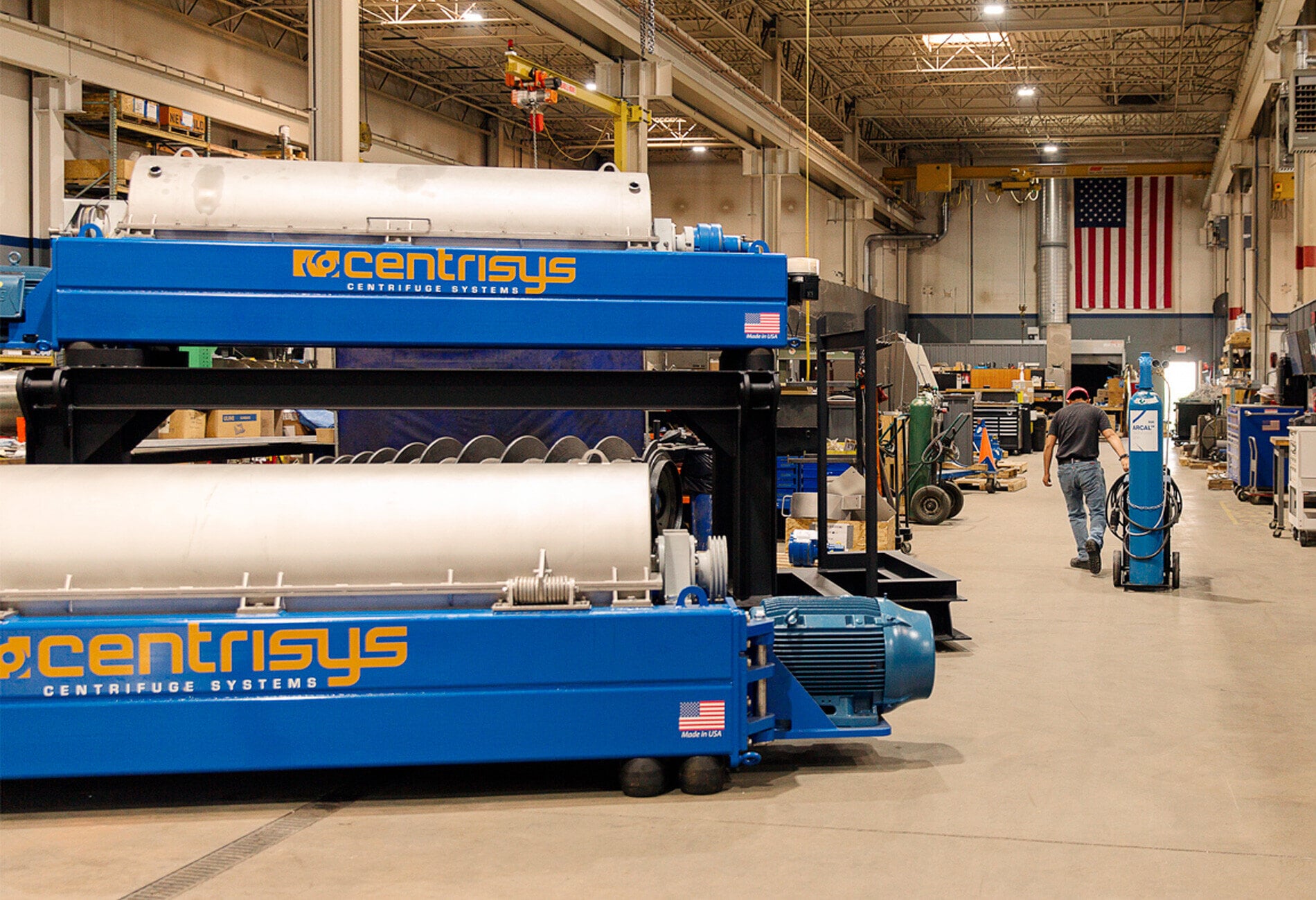
Remediation schedules leave little room for unexpected equipment downtime. Centrisys/CNP supports both rented and permanently installed centrifuges with startup assistance, operator training, technical troubleshooting, preventative maintenance, OEM parts, inspections, rebuilds and field service.
Our team is available throughout the life of the equipment to help maintain reliable performance and keep your operation moving.
+-
How does a decanter centrifuge work in site remediation?
A decanter centrifuge feeds slurry or sludge into a bowl that spins at high speed. Centrifugal force pushes solids to the bowl wall, where a scroll conveys them out as dewatered cake. Clarified liquid exits the opposite end for reuse, further treatment or discharge. Because the process is continuous, material is processed as it is generated.
+-
What materials can a centrifuge dewater on a remediation project?
Common feed materials include soil-washing slurry, lagoon and pond sludge, dredged sediment, tank and vessel bottoms, digester contents and landfill leachate solids. Results depend on particle size, solids concentration and material characteristics, so Centrisys/CNP evaluates a sample of your material before recommending equipment.
+-
How does a centrifuge compare to geotextile tubes, drying beds or gravity settling?
Passive methods can work well when space, time and weather allow. A decanter centrifuge separates solids continuously in a compact footprint and is less dependent on weather, which helps projects with tight schedules or limited jobsite space. The right choice depends on project duration, site space, disposal costs and required cake dryness.
+-
Can I rent a centrifuge for a short-term or emergency cleanup?
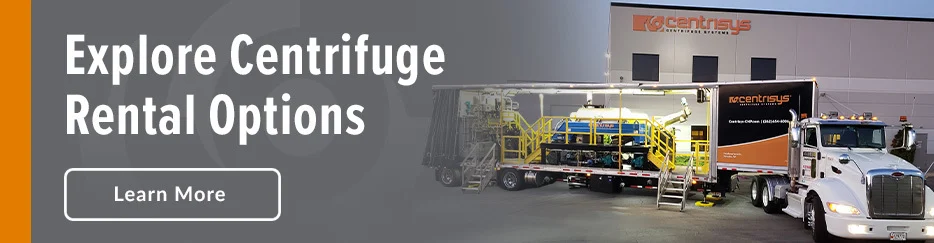
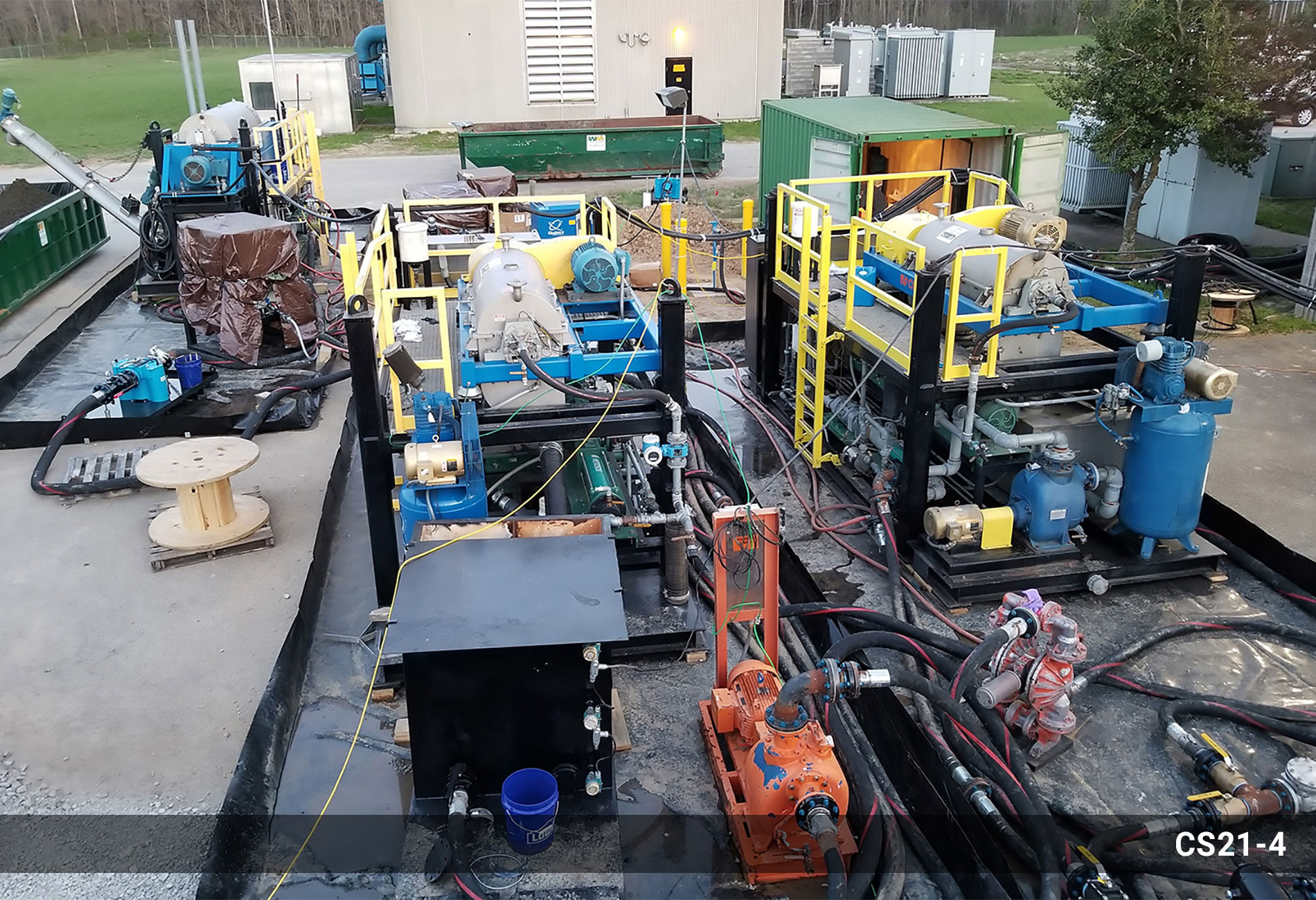
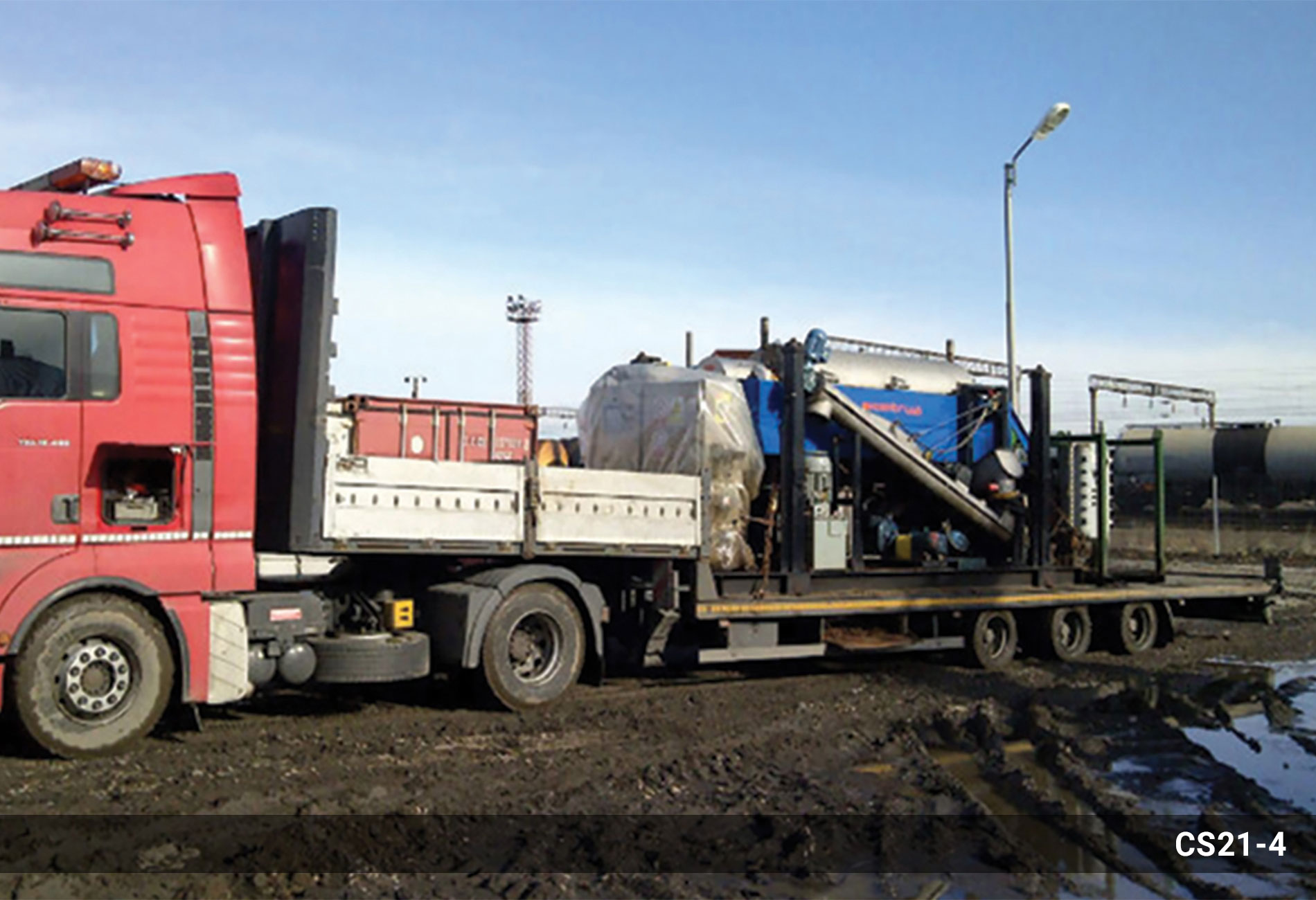
Yes. Centrisys/CNP offers emergency, short-term and lease-to-own centrifuge rentals. Rental systems are available skid-mounted or trailer-mounted and can include feed pumps, polymer makeup systems, solids conveyors and complete control systems for automatic operation. Equipment purchase is also available for long-term or permanent operations.
+-
What cake dryness and solids capture can I expect?
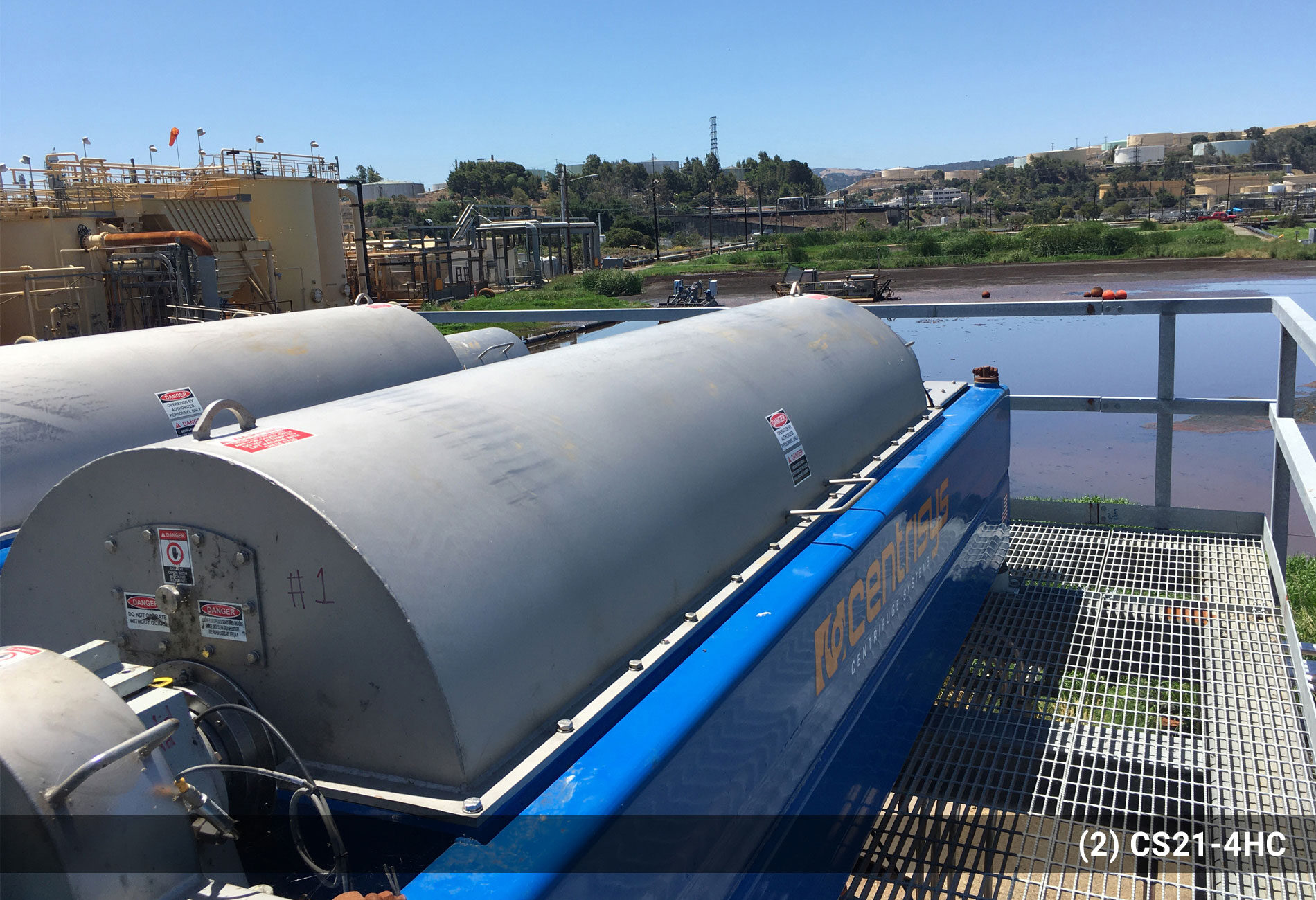
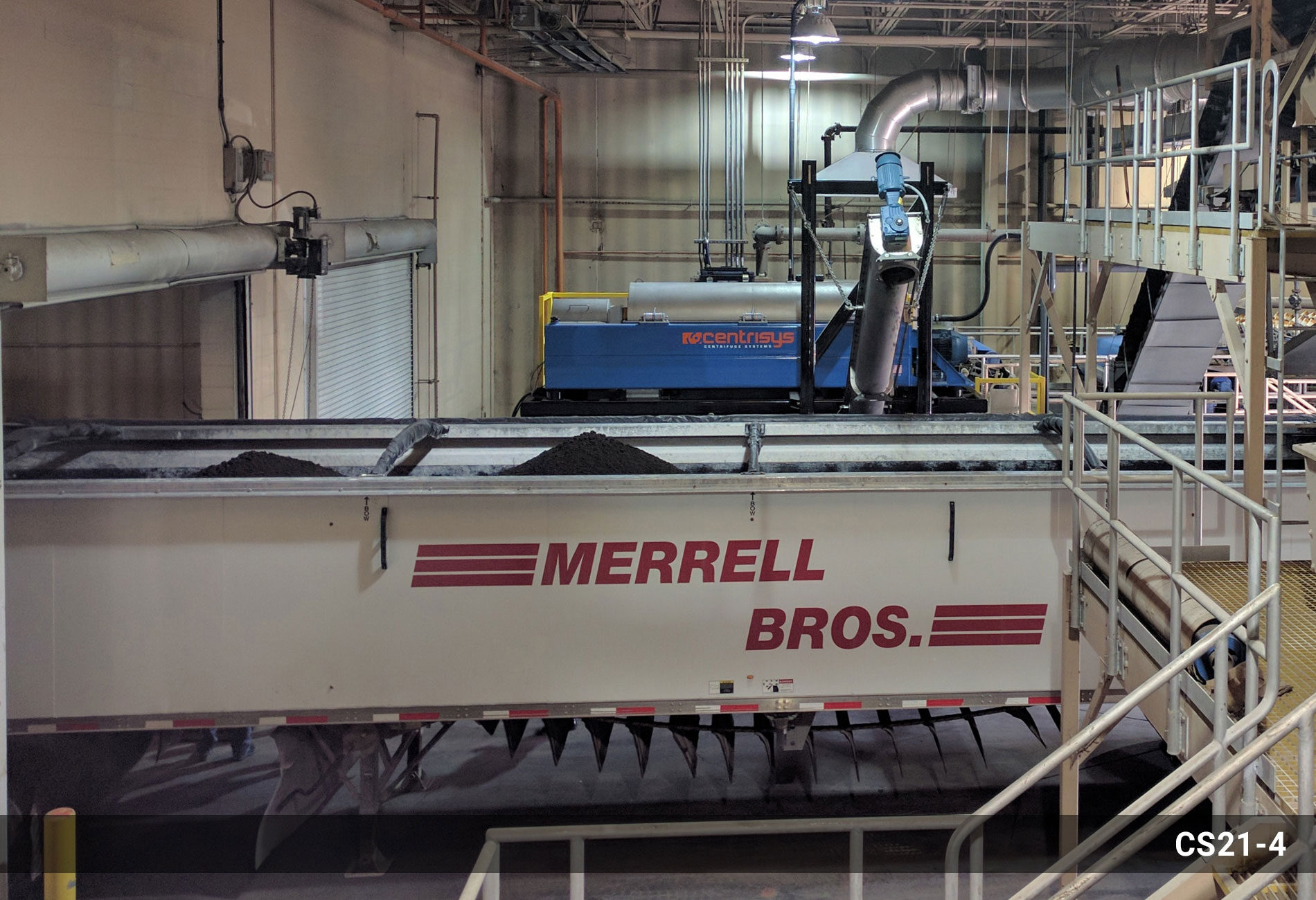
Results vary with the feed material, polymer selection and throughput. As one example, Merrell Bros. runs a Centrisys CS21-4HC at 100 to 200 gpm on a mixture of septage, grease trap waste and biosolids, reaching up to 33% cake solids. Sample analysis or pilot testing is the most reliable way to predict results for your material.
+-
Do you offer sample analysis and pilot testing?
Yes. Lab sample analysis reviews solids content and process feasibility. Full-scale pilot testing runs equipment on site with your actual material, including a 2-phase centrifuge trailer with polymer preparation and a testing lab (70 to 250 gpm) and a 2-phase skid system (30 to 500 gpm). A written report summarizes sizing, throughput, solids capture, cake solids and polymer selection.
+-
What information is needed to size a centrifuge for my project?
Helpful details include the feed material type, solids concentration, required throughput, target cake dryness and solids capture, discharge requirements, abrasiveness, available space and utilities, and expected project duration. If you can provide a representative sample, our team can test it to confirm equipment sizing and operating parameters.
+-
Can a centrifuge separate oil, water and solids from tank cleanouts?
Yes. A 3-phase decanter centrifuge separates two liquid phases and solids in one step, which can help with oily sludge from petroleum storage tanks and industrial cleanouts. Centrisys/CNP manufactures 3-phase models, and a 3-phase skid system is available for pilot testing.
Literature
- Sludge Reduction Technologies for Plants of All Sizes
- Get More from your Centrifuge
- 9 Reasons to Choose Centrisys
- The Centrisys-Viscotherm Scroll Drive is the Most Efficient in the Centrifuge Industry
- Energy-Efficient 3-Phase Separation
- The Right Dewatering Solution, the Fastest Payback, Lowest Cost of Ownership
- Complete Self-Contained Mobile Trailer Systems
- High Performance Skid Systems
- Centrisys THK Sludge Thickener Lease+ Program
- The Lowest Total Cost of Ownership in the Industry
- CSI: A 40+ Point Centrifuge Inspection Program
- Decanter Centrifuge Parts Available When You Need Them
- Urgent Centrifuge Repair Response, Because You Can't Afford to Wait
- Enhance Performance and Extend the Life of your Decanter Centrifuge
- Decanter Centrifuge Service & Repair
Videos
General Arrangements
- THK600 Sludge Thickener Centrifuge
- THK350 Sludge Thickener Centrifuge
- THK200 Sludge Thickener Centrifuge
- CS26-4EV 2-Phase Decanter Centrifuge
- CS26-4 2-Phase Decanter Centrifuge
- CS21-4 2-Phase Decanter Centrifuge
- CS18-4 2-Phase Decanter Centrifuge
- CS30-4 2-Phase Decanter Centrifuge
- CS18-4 3-Phase Decanter Centrifuge
- CS21-4 3-Phase Decanter Centrifuge
- CS14-4 3-Phase Decanter Centrifuge
- CS14-4 2-Phase Decanter Centrifuge
- CS10-4 3-Phase Decanter Centrifuge
✕